


Blog
Dish Drying Mat: Why Diatomite Stone Mats Are the Best Choice for Your Kitchen

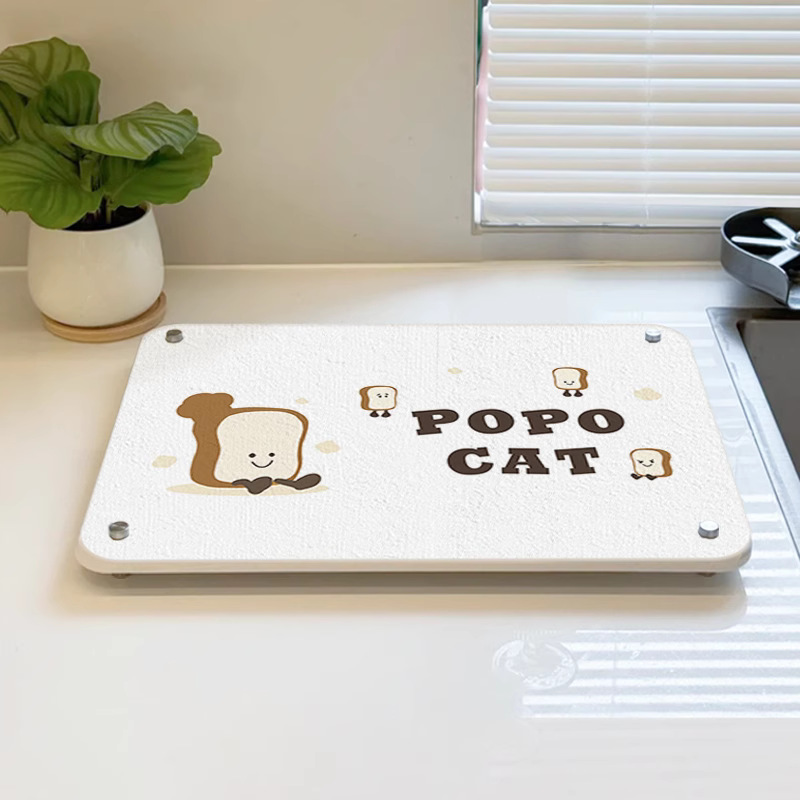
After washing a sink full of dishes, the last thing you want is a puddle of standing water on your counter. A quality dish drying mat solves this problem—but not all drying mats are created equal. Traditional fabric and microfiber mats soak up water but stay damp, breeding bacteria and requiring constant laundering. Diatomite stone drying mats take a fundamentally different approach: they absorb water instantly through millions of microscopic pores and release it through rapid evaporation, leaving the surface dry within seconds. In this guide, we’ll cover how diatomite dish drying mats work, what makes them superior, and how to choose one that fits your kitchen.
Table of Contents


Next step: browse our complete OEM product catalog.
Whether you are sourcing for retail or wholesale, browse stone dish drying rack options to see customization options and factory-direct pricing.
What Is a Dish Drying Mat?
A dish drying mat is a countertop accessory designed to absorb water from freshly washed dishes, glasses, and utensils. It serves as a dedicated drying zone—typically placed next to the sink or under a dish rack—that catches drips and prevents water from pooling on your countertop.
Traditional dish drying mats are made from microfiber, cotton, or silicone. Microfiber and cotton versions absorb water but retain moisture for hours. Silicone mats are waterproof but don’t absorb at all—water simply pools on the surface until it evaporates or you wipe it away.
Diatomite (also known as diatomaceous earth) dish drying mats represent a newer category that combines the best of both worlds: instant absorption like a towel, plus rapid drying and hygiene benefits that fabric mats can’t match.
How Diatomite Dish Drying Mats Work
The core material—diatomite—is a natural sedimentary rock formed from the fossilized remains of diatoms, ancient single-celled algae. Under a microscope, diatomite reveals an intricate network of pores, some as small as 0.5 microns. These pores give the material an enormous internal surface area.
When water contacts a diatomite dish drying mat, capillary action pulls moisture into these pores almost instantly. Because water is spread across such a vast surface, it evaporates quickly under normal kitchen conditions. The mat surface feels dry to the touch shortly after you set down wet dishes.
This mechanism is fundamentally different from a sponge or towel. A sponge holds water in relatively large cavities where bacteria can thrive. Diatomite’s fine porosity doesn’t provide a hospitable environment for microorganisms—the rapid drying cycle disrupts their life cycle before colonies can form.
5 Key Benefits of Diatomite Drying Mats
Next step: learn how leading importers source diatomite mats.
For detailed specifications and wholesale pricing, our dish drying mat.
1. Instant Absorption
Water disappears from the surface within seconds of contact. You’ll see a brief dark spot where water touches the mat, and then it fades as the moisture disperses into the material’s pore network.
2. Mold and Mildew Resistant
Because the mat dries completely between uses, mold, mildew, and bacteria don’t get the sustained moisture they need to grow. This is a significant advantage over fabric mats, which can develop musty odors within weeks of daily use.
3. No Laundering Required
A diatomite dish drying mat doesn’t need to go in the washing machine. A quick wipe with a damp cloth or a light sanding with the included abrasive paper restores the surface to like-new condition. This saves time, water, and detergent.
4. Long Service Life
With proper care, a quality diatomite drying mat lasts 2-3 years or longer. Fabric mats, by contrast, typically need replacement every 3-6 months due to staining, odor, and fiber breakdown.
5. Sleek Aesthetic
Diatomite mats have a clean, minimalist appearance that complements modern kitchens. Available in various colors and finishes, they look intentional on your counter—not like a utilitarian rag you’d rather hide.
Types of Dish Drying Mats Compared
| Type | Absorption | Drying Speed | Odor Resistance | Lifespan | Maintenance |
|---|---|---|---|---|---|
| Diatomite Stone | Excellent | 30-60 sec | Excellent | 2-3+ years | Wipe / light sand |
| Microfiber | Good | 2-4 hours | Poor (musty odor) | 3-6 months | Machine wash weekly |
| Cotton | Good | 3-6 hours | Poor | 3-6 months | Machine wash weekly |
| Silicone | None (water pools) | 30-60 min | Good | 1-2 years | Wipe down |
| Bamboo | Moderate | 1-2 hours | Moderate | 6-12 months | Wipe / occasional oil |
As the table shows, diatomite stone drying mats lead across the metrics that matter most: absorption, drying speed, and hygiene. If you’re exploring drying mats for your kitchen, the diatomite option is worth serious consideration.
How to Choose the Right Dish Drying Mat
Size and Placement
Measure your available counter space next to the sink. Common sizes range from 30×20 cm (compact, good for small kitchens) to 60×40 cm (full-size, accommodates a full dish rack plus extra items). Make sure the mat fits without overlapping your sink edge or stove area.
Thickness and Durability
A quality diatomite dish drying mat is typically 8-10 mm thick. Thinner mats (under 6 mm) may crack under the weight of heavy pots or cast iron pans. Look for a mat with uniform thickness and smooth edges.
Anti-Slip Features
Many diatomite mats come with a non-slip base—either integrated rubber feet, a silicone underlay, or a cork backing. This prevents the mat from sliding on smooth countertops when you place or remove dishes.
Color and Finish
Diatomite mats are available in neutral tones (gray, beige, white) as well as darker shades. Lighter colors show water marks more readily during use but look cleaner between uses. Choose a color that complements your kitchen palette.
Certifications and Quality
If you’re sourcing dish drying mats in bulk—for a retail brand, hotel supply, or corporate gifting—look for manufacturers that provide material safety certifications. At Sheenyoo, our diatomite products undergo SGS testing to verify composition and safety. Learn more about our OEM services for custom-branded drying mats.
Care and Maintenance Tips
A diatomite dish drying mat requires minimal but specific care:
- Daily: After use, let the mat air-dry completely. No action needed—evaporation handles this automatically.
- Weekly: Wipe the surface with a damp, non-abrasive cloth to remove any mineral deposits or food residue.
- Monthly: If the surface develops stains or reduced absorption, lightly sand it with the included abrasive paper (or fine-grit sandpaper, 400-600 grit). This removes the top micro-layer and exposes fresh pores.
- Never: Submerge the mat in water, put it in the dishwasher, or use harsh chemical cleaners. The material is porous and will absorb cleaning agents, which can then transfer to your dishes.
Properly maintained, a diatomite dish drying mat will perform consistently for years. For businesses considering bulk orders, our wholesale program offers competitive pricing with consistent quality control across every unit.
Beyond Dishes: Multi-Purpose Uses
While designed for the kitchen, a diatomite drying mat is versatile enough for other applications:
- Pet feeding area: Place under water bowls to catch splashes and drips. The quick-dry surface keeps your floor dry and prevents water damage. See our dedicated pet feeding mats for more options.
- Bathroom counter: Use as a soap dish or toothbrush holder mat to keep counters dry and free of water rings.
- Plant station: Place under potted plants to catch excess water after watering, protecting wooden shelves and window sills.
- Coffee and bar area: Absorb drips from espresso machines, pour-over setups, and bar tools.
This versatility is one reason diatomite products have gained traction across multiple home categories. For businesses looking to build a cohesive product line, Sheenyoo offers custom logo printing and branded packaging across our entire diatomite catalog—from bathroom mats to kitchen accessories and beyond.
Frequently Asked Questions
Q: How long does a diatomite dish drying mat last?
A: With proper care, a quality diatomite drying mat lasts 2-3 years or more under daily household use. Commercial environments (restaurants, hotels) may see a shorter lifespan due to heavier usage. Regular light sanding extends the mat’s effective life by restoring surface porosity.
Q: Can a diatomite dish drying mat go in the dishwasher?
A: No. Never submerge a diatomite mat in water or place it in a dishwasher. The material is highly porous and will absorb large amounts of water, which can cause internal cracking or structural breakdown. Clean by wiping with a damp cloth and occasional light sanding only.
Q: Why does my dish drying mat develop stains?
A: Stains on a diatomite mat typically come from mineral deposits in tap water (hard water spots) or from colored food residue (coffee, tea, tomato sauce). These are cosmetic and don’t affect performance. To remove stains, lightly sand the surface with fine-grit sandpaper (400-600 grit).
Q: Is a diatomite dish drying mat safe for all countertop materials?
A: Diatomite mats are generally safe for granite, quartz, laminate, tile, and stainless steel countertops. However, because the mat surface is slightly abrasive, avoid dragging it across delicate surfaces like polished marble. Use a mat with a non-slip backing for added protection.
Q: Can I use a diatomite dish drying mat for hot pots and pans?
A: Diatomite mats can handle warm dishes straight from the drying rack, but they are not designed as trivets for hot cookware directly from the stove or oven. Extreme heat (above approximately 200°C / 390°F) may cause thermal shock and cracking. Use a dedicated trivet for hot pots.