


Blog
How to Start a Bath Mat Business: OEM Diatomite Stone Bath Mat

Why a Diatomite Stone Bath Mat Business Is a Strong 2026 Opportunity
Next step: get your custom design mockup within 24 hours.
Whether you are sourcing for retail or wholesale, browse diatomite bath mat options to see customization options and factory-direct pricing.
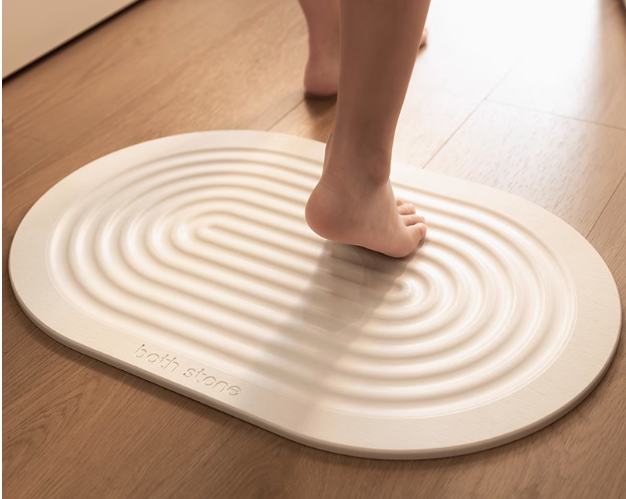
The global bath mat market is undergoing a structural shift. Consumers are moving away from fabric mats toward diatomite stone bath mats that dry in seconds, resist mold through rapid moisture removal, and offer a long service life with minimal care. For entrepreneurs evaluating how to start a bath mat business, the timing is favorable: demand is rising, supply is consolidating around OEM manufacturers, and entry barriers are lower than in mature home goods categories.
Three market signals make this category attractive to new B2B buyers. First, repeat-purchase behavior is strong because stone bath mats eventually need replacement after years of household use, creating a built-in customer base for retail and e-commerce resellers. Second, gross margins on private-label diatomite bath mats can be higher at retail than on textile alternatives. Third, the OEM supply chain is mature in China, with manufacturers like Sheenyoo offering low MOQs, full customization, and export-ready logistics that allow small importers to compete with established brands.
For buyers asking how to start a bath mat business in the diatomite segment, the model is not “build a factory” — it is “select the right OEM partner, validate a product line, and scale through a chosen sales channel.” This guide walks through each step with B2B decision frameworks.
Choose a Business Model: Wholesale, Private Label, or OEM Brand
Before sourcing products, you need to commit to a business model. The three viable models for a new diatomite bath mat business differ in capital requirements, risk, and upside.
| Business Model | Startup Capital | MOQ Required | Margin Range | Time to First Sale |
|---|---|---|---|---|
| Wholesale Resale | Lower | Low minimums | Moderate | Fastest |
| Private Label (Light Branding) | Moderate | Low to moderate | Higher | Moderate |
| OEM Brand (Full Custom) | Highest | Higher | Highest | Longest |
Wholesale resale is the fastest path. You buy finished stock products from an existing brand or factory and resell under your own shop. This is best for first-time buyers validating demand without committing to branding.
Private label is the recommended starting point for most new bath mat businesses. You add a logo and minimal packaging customization to a standard product, allowing you to charge a brand premium while keeping MOQs low and timelines short.
OEM brand means full product customization: shape, size, color, packaging, and exclusive design. This is the highest-margin model but requires larger capital, longer lead times, and proven sales traction before commitment.
Build a Realistic Startup Budget and Cash Flow Plan
One of the most common mistakes new B2B buyers make is underestimating working capital. The product cost is only one component. A realistic first-order budget for a private-label diatomite bath mat business should include:
- Inventory: First order quantity and landed cost per unit (including OEM logo, packaging, and freight)
- Custom packaging and labels: Initial print runs and design
- Certifications and testing: Budget for compliance documentation such as REACH or California Prop 65 depending on target market
- Marketing launch budget: Amazon PPC, Shopify ads, or influencer seeding
- E-commerce infrastructure: Shopify, Amazon Pro Merchant, photography, and listing copy
- Working capital reserve: To cover reorder cycles and unsold inventory
Total first-year budget for a private-label launch depends on order volume, packaging, compliance, and marketing choices. Wholesale resale can be started with less capital if you skip branding. Full OEM brand launches typically require more capital when including second-order inventory and marketing scale-up.
Select an OEM Partner: The 7-Point Vetting Framework
Next step: compare wholesale pricing by volume tier.
For detailed specifications and wholesale pricing, our diatomite bath mat collection.
For buyers researching how to start a bath mat business, OEM partner selection is the highest-leverage decision. The wrong supplier is a common cause of new business failures — late shipments, inconsistent quality, or product that fails compliance testing. Use this 7-point framework:
- Material verification: Request raw diatomite origin documentation and compression density data. Inconsistent density correlates with chipping and short product life
- Production capacity audit: Confirm the factory can scale from a pilot order to larger production volumes. Request production line photos and monthly output figures
- Quality control process: Require a written QC protocol covering raw material inspection, in-process checks, and pre-shipment AQL sampling. A reputable OEM will provide recent third-party inspection reports
- Customization depth: Verify the factory can execute your logo application method (UV print, silk screen, laser engraving, embossed) and packaging requirements without subcontracting
- Compliance documentation: Confirm availability of compliance documentation (for example REACH or California Prop 65) relevant to your target market
- Communication responsiveness: Sample response time under 24 hours on working days is a strong signal of operational discipline. Slow pre-sale responsiveness almost always predicts slow problem resolution post-sale
- Reference customers: Ask for 2–3 Western brand clients you can contact directly. Honest suppliers will provide references; evasive answers are a red flag
Sheenyoo satisfies all seven criteria for B2B buyers entering the diatomite stone bath mat category, with documented production capacity, OEM customization across logo/packaging/shape, and client references in international markets.
Validate Product-Market Fit Before Committing Capital
Most new bath mat businesses over-order their first batch. A disciplined validation sequence reduces this risk:
- Step 1 — Sample evaluation: Order 3–5 samples from 2–3 shortlisted OEM factories. Compare absorption speed, edge finishing, color consistency, and packaging quality. Allocate 2 weeks for evaluation
- Step 2 — Pre-launch demand test: List the product on a single sales channel (Amazon, Shopify, or Etsy) with a small inventory of 50–100 units. Run targeted ads to gauge conversion rate and customer feedback
- Step 3 — Customer review analysis: After 30–50 units sold, review every customer comment. Quality complaints about chipping, odor, or absorption speed signal a product specification problem before scaling
- Step 4 — Pilot order commitment: Only after validating a 4.0+ star rating and repeat-purchase signals should you commit to a full OEM order
This validation cycle prevents the most expensive mistake in how to start a bath mat business: committing large sums to inventory that does not sell.
Launch Through a Single High-Converting Sales Channel
New bath mat businesses almost always fail when they try to launch on Amazon, Shopify, TikTok Shop, and wholesale simultaneously. Channel focus is critical. For a B2B buyer new to the diatomite segment, choose one of these three launch channels:
| Sales Channel | Best For | Initial Volume | Margin Profile |
|---|---|---|---|
| Amazon FBA | US/UK/EU consumer reach | Moderate initial volume | Dependent on category pricing |
| Shopify DTC | Brand-building with email and paid social | Lower initial volume | Dependent on marketing efficiency |
| Wholesale to Retailers | B2B distribution to spas, hotels, boutiques | Larger order sizes | Lower margin per unit |
Amazon FBA is the lowest-friction launch for first-time importers because FBA handles fulfillment, customer service, and returns. Shopify DTC requires more marketing skill but yields higher margins and direct customer data. Wholesale is best for buyers with existing retail relationships and higher capital tolerance.
Scale Operations: From First Order to Sustainable Business
Once you reach consistent monthly sales of 200+ units, the business moves from launch mode to scale mode. Three operational priorities matter most:
- Inventory forecasting: Implement a 60–90 day forward order book with your OEM to lock in production slots and avoid stockouts during peak Q4 season
- Cost renegotiation: As volume grows, request unit cost reductions and improved payment terms (for example 30% deposit / 70% before shipment)
- Product line expansion: Add adjacent OEM products from the same diatomite material — coasters, soap dishes, dish drying mats, and pet mats — to increase average order value from existing customers
Buyers who follow this sequence improve their chances of reaching break-even and building a sustainable margin. The diatomite stone bath mat category rewards operational discipline and OEM partnership quality more than marketing spend.
Frequently Asked Questions About Starting a Bath Mat Business
How much money do I need to start a diatomite bath mat business?
Working capital requirements depend on order volume, packaging, compliance, and marketing choices. Wholesale resale can be started with less capital; full OEM brand launches require more.
Do I need a business license or import experience to start?
You need a registered business entity in your target market and a US-based importer of record if selling on Amazon FBA. Most new B2B buyers work with a customs broker for first shipments; experienced OEM suppliers like Sheenyoo provide commercial invoices, packing lists, and HS codes to streamline customs clearance.
How long does an OEM order take from confirmation to delivery?
Standard OEM production lead time is around 15-25 days, plus ocean freight transit to North America or Europe. Air freight is faster but more expensive. First-time buyers should plan several weeks total from purchase order to receipt.
What is the minimum order quantity for a private-label diatomite bath mat?
Reputable OEM factories offer scalable MOQs for private-label orders, with lower minimums available for stock-product resale without customization. Volume discounts may apply at higher order quantities.
Can I start a bath mat business from a non-English-speaking country?
Yes. The diatomite stone bath mat category has demand in international markets across Europe, Asia, and North America. OEM factories in China are experienced exporters with multilingual sales support, English documentation, and DDP shipping options to most major markets.
What certifications do I need to sell diatomite bath mats in the US or EU?
For US sales, California Prop 65 compliance is relevant if selling in California. For EU sales, REACH compliance is the key chemical regulation. Quality OEM suppliers provide pre-shipment test reports for relevant compliance. Quality OEM suppliers provide pre-shipment test reports for all relevant certifications.
Launch Your Diatomite Bath Mat Business With the Right OEM Partner
Understanding how to start a bath mat business comes down to three decisions: choosing the right business model, selecting a vetted OEM partner, and validating demand before scaling capital. The diatomite stone bath mat category offers strong unit economics, repeat-purchase behavior, and a mature OEM supply chain that lowers entry barriers for new B2B buyers.
Sheenyoo is a specialized stone bath mat manufacturer supporting entrepreneurs and importers with low-MOQ private-label programs, full OEM customization, and export-ready logistics. Whether you are validating your first product idea or scaling an existing line, our team can help you build a defensible bath mat business with reliable supply.
Ready to launch? Request wholesale pricing and OEM catalog or contact our B2B team for a custom product plan tailored to your target market.